









Blog
August 18, 2025
How to Measure a Sanding Belt (4 Fool-Proof Methods)

Record sizes as width × length (full loop circumference). Choose a method below.
Method 1Fold & Measure (fastest)
1
Lay the old belt flat and fold once to make a double layer.
2
Align the splice at one end and the fold at the other; measure splice → fold.
3
Double that value for the total loop length (circumference).
4
Measure width; record as
width × length.If the belt is split, cut it once and measure end-to-end — that equals the loop length.
Method 2String Method (no tape measure)
1
Route a piece of string along the exact belt path (tension released).
2
Mark where the string meets; cut or hold the mark.
3
Lay it flat and measure — that’s your loop length.
4
Measure and note the width.
Helpful notes
- Tolerance: If you’re within a few mm of a standard length, round to the nearest common size.
- Common lengths (mm): 915, 1000, 1220, 1320, 2000 (others available).
- Metric ⇆ Imperial: 1″ = 25.4 mm. Example: 2″ ≈ 50.8 mm.
- Record format: always
width × length, e.g.50 mm × 2000 mm. - Width tip: If you don’t have the old belt, read the contact wheel width or the machine’s spec plate.
Ordering checklist: width × length, grit, quantity, and application (e.g. stainless steel, hardwood). If unsure, tell us your material and finish goal—we’ll advise the best belt type.
Popular sizes (quick reference)
| Width | Common Lengths | Notes |
|---|---|---|
| 10–13 mm | 330, 457, 610 | Finger files / narrow arm sanders |
| 25–50 mm | 915, 1000, 1220, 1320 | Bench sanders / Dynafile types |
| 75–100 mm | 2000+ | Larger linishers & belt grinders |
FAQ
My belt snapped — can I still measure it?
Yes. Cut it once to create a straight strip and measure end-to-end for the loop length; measure width as normal.
What if the machine has auto-tension?
Release tension before measuring (string or tape). Auto-tension can add length if left engaged.
Related posts
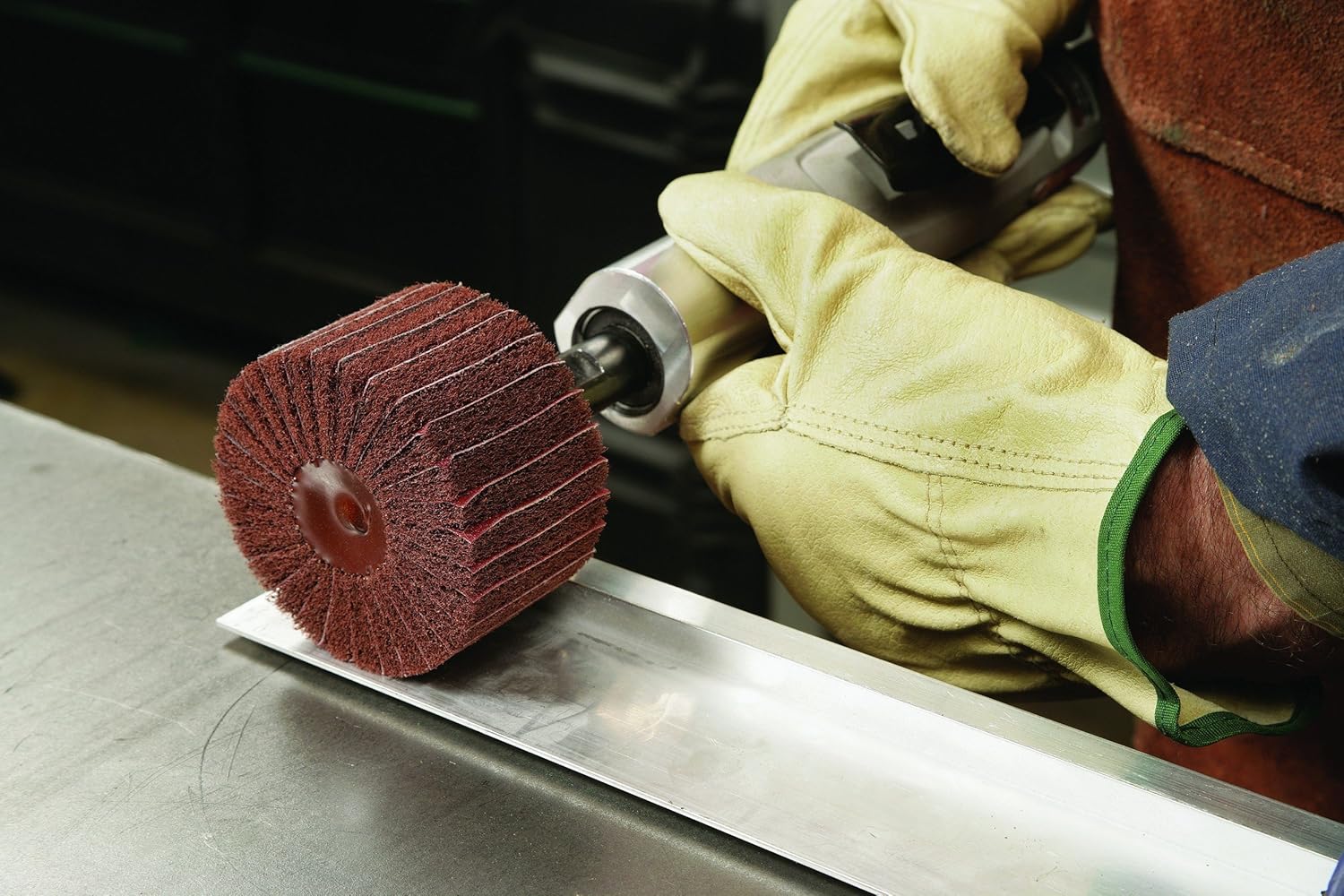
Flap Wheel Guide – Finishing Abrasives for..
Flap wheels are finishing abrasives designed to provide smooth, controlled deburring, blending..
Read more
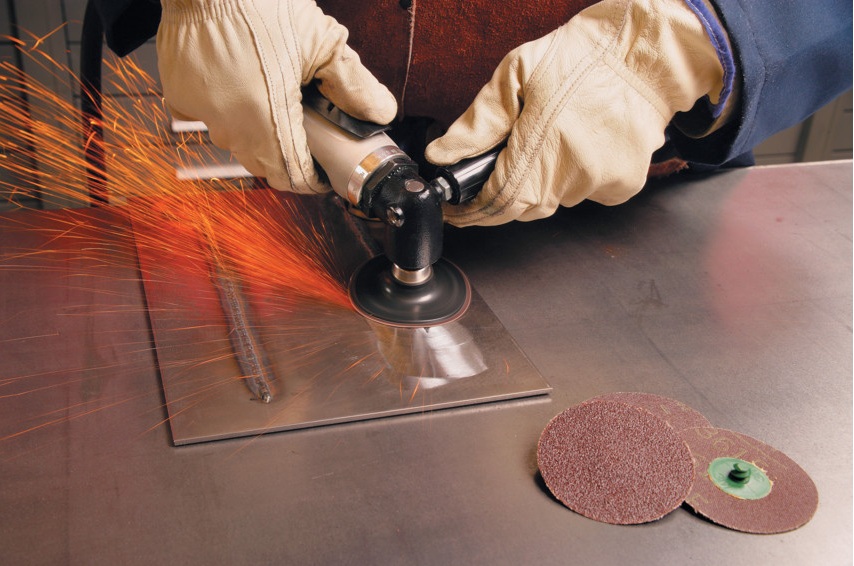
Roloc Disc Guide – Quick Change Abrasives for..
📘 Shop Roloc Discs → Roloc discs are a family of quick-change abrasive discs designed to..
Read more
Surface Conditioning Disc Guide – Finishing,..
📘 Shop Surface Conditioning Discs → Surface conditioning discs (non-woven discs) are..
Read more
Orbital Sanding Disc Guide – How to Choose the..
📘 Shop Orbital Sanding Discs → Orbital sanding discs (also known as Velcro-backed or hook..
Read more
Grinding Disc Guide – How to Choose the Right..
📘 Shop Grinding Discs → Grinding discs are designed for material removal, weld dressing,..
Read more
Cutting Disc Guide – How to Choose the Right..
📘 Shop Cutting Discs → If you’re unsure whether to choose aluminium oxide, INOX..
Read more