










Sanding Blocks & Sponges
📘 Read our Sanding Blocks & Sponges Knowledge-Base Guide →
Sanding Blocks and Sponges for Hand Sanding & Surface Finishing
Browse our full range of sanding blocks and sponges for controlled hand sanding, surface preparation and finishing. Choose from hand sanding blocks for use with abrasive sheets and strips, abrasive blocks with the abrasive built directly into the block, flexible abrasive sponges for contours and profiles, and specialist flexible blocks for blending, awkward shapes and demanding finishing applications.
Sanding Blocks and Sponges – Choose the Right Type for Your Application
Sanding blocks and sponges give you greater control than sanding with loose abrasive paper alone. The right product depends mainly on the shape of the surface, how much support you need behind the abrasive and whether you require a firm, flat sanding action or something more flexible and conformable.
Hand sanding blocks provide better pressure distribution when using abrasive strips or sheets. Abrasive blocks have the abrasive built into the block itself for quick, controlled sanding. Abrasive sponges flex around curves and profiles, while specialist flexible blocks are designed for blending, awkward shapes and more demanding finishing work.
Looking for other hand sanding and finishing products? Explore our related abrasive categories:
Related Sanding & Finishing Categories:
Hand Sanding Blocks
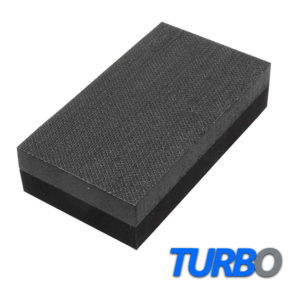
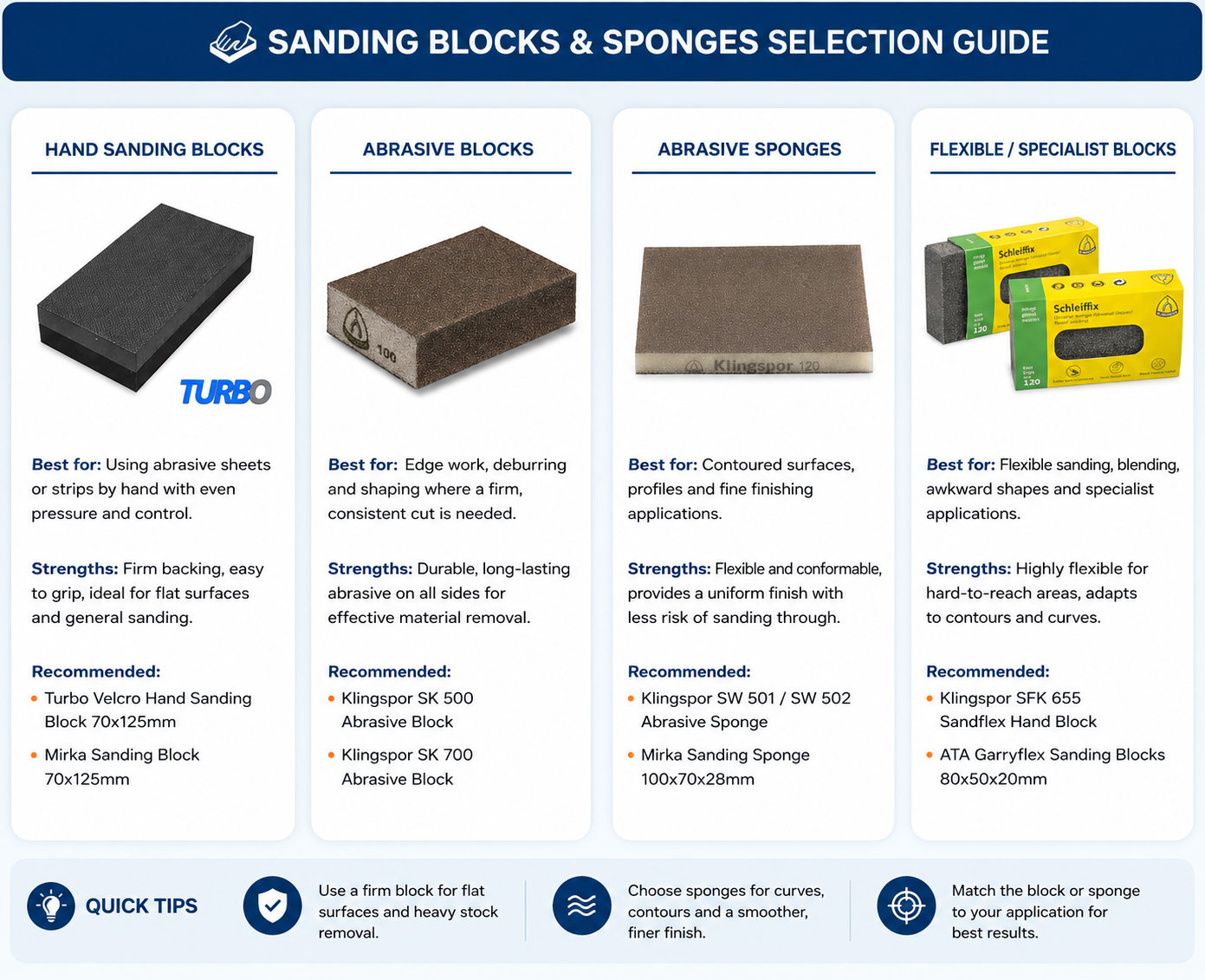
Hand sanding blocks are designed for using abrasive sheets and sanding strips by hand with improved pressure control. Supporting the abrasive with a block helps distribute pressure more evenly across the workpiece, producing a flatter and more consistent finish than sanding directly with your fingers.
Popular choices include the Turbo Hard/Soft Velcro Hand Sanding Block for 70x125mm Strips, Mirka Sanding Block 70x125mm, Mirka 2 Sided Soft/Hard Sanding Block and Klingspor HK 100 Hand Block. Self-fastening blocks allow compatible hook-and-loop abrasive strips to be fitted and changed quickly.
- Best for: flat surfaces, panels, paint preparation, filler and general hand sanding
- Why choose: better pressure control and more even sanding than using abrasive sheets by hand alone
- Tip: use a firmer block where maintaining a flat surface is important and a softer block where slight conformity is required
Abrasive Blocks
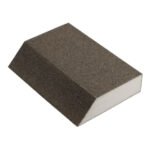
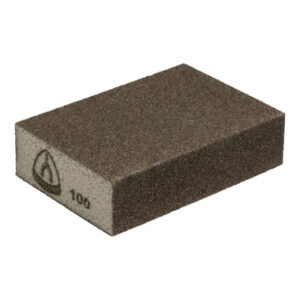
Abrasive blocks have the abrasive built directly into the block itself, so there is no need to attach a separate sheet or strip. Their firmer construction makes them useful for controlled sanding, edge work, deburring and general surface preparation where you want a compact abrasive that is easy to hold and control.
Popular choices include Klingspor SK 500 Aluminium Oxide Abrasive Blocks and Klingspor SK 700 Aluminium Oxide Abrasive Blocks. These solid abrasive blocks provide a simple hand sanding solution for workshop preparation, finishing and edge work.
- Best for: edges, deburring, controlled sanding and general preparation
- Why choose: abrasive and backing combined into one simple product
- Tip: use lighter pressure during finishing stages to avoid creating deeper scratches than necessary
Abrasive Sponges
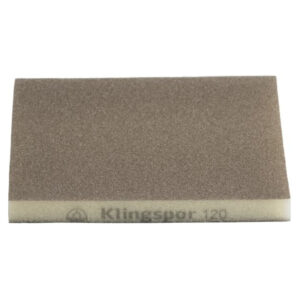
Abrasive sponges use a soft, flexible foam backing that allows the abrasive to follow curves, profiles and irregular surfaces more easily than a rigid sanding block. They are particularly useful for paint preparation, finishing work and shaped components where maintaining contact with the surface is important.
Popular choices include Klingspor SW 501 Aluminium Oxide Abrasive Sponges, Klingspor SW 501 TR, Klingspor SW 502 Silicon Carbide Abrasive Sponges, Klingspor SW 510 and the range of Mirka Sanding Sponges in different sizes, thicknesses and configurations.
- Best for: contours, profiles, curved surfaces, paint prep and finishing
- Why choose: flexible construction follows the shape of the workpiece
- Tip: choose a softer sponge for complex contours and a firmer sponge when you need slightly more support
Specialist / Flexible Blocks
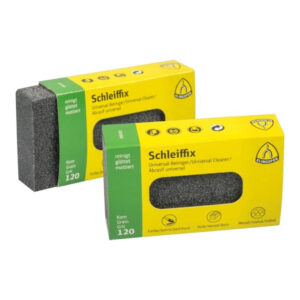
Specialist and flexible sanding blocks are designed for applications where a conventional hand block or abrasive sponge does not provide enough flexibility or the right finishing action. They work particularly well on awkward shapes, metals, blending applications, detailed areas and specialist surface finishing.
Popular choices include Klingspor SFK 655 Sandflex Hand Blocks and ATA Garryson Garryflex Sanding Blocks. These flexible abrasive blocks can conform more readily to shaped surfaces and are useful for cleaning, blending and refining surfaces where controlled flexibility is required.
- Best for: awkward shapes, metal finishing, blending, cleaning and specialist applications
- Why choose: flexible abrasive construction provides greater conformity than rigid blocks
- Tip: ideal where you need more control than loose abrasive material but greater flexibility than a conventional hard sanding block
View Specialist & Flexible Sanding Blocks →
Sanding Blocks and Sponges Quick Selection Guide
| Type | Best For | Typical Uses |
|---|---|---|
| Hand Sanding Blocks | Pressure control & flat sanding | Abrasive strips, sheets, panels, paint prep and filler |
| Abrasive Blocks | Controlled sanding & edges | Deburring, edge work, preparation and general sanding |
| Abrasive Sponges | Contours & profiles | Curved surfaces, paint preparation and finishing |
| Specialist / Flexible Blocks | Blending & awkward shapes | Metal finishing, detailed areas, cleaning and specialist applications |
Frequently Asked Questions
What are sanding blocks and sponges used for?
Sanding blocks and sponges are used for controlled hand sanding, surface preparation, paint and filler work, wood finishing, metal preparation and sanding curved or shaped components. Different constructions provide different levels of firmness and flexibility.
What is the difference between a hand sanding block and an abrasive block?
A hand sanding block acts as a holder or backing for a separate abrasive sheet or strip. An abrasive block already contains the abrasive within or on the block itself, so no separate abrasive needs to be attached.
When should I use an abrasive sponge?
Use an abrasive sponge when you need the abrasive to conform to curves, profiles, edges or uneven surfaces. The foam construction makes it more flexible than a conventional firm sanding block.
What are flexible sanding blocks used for?
Flexible sanding blocks are useful for blending, cleaning, detailed metal finishing, awkward shapes and other applications where a rigid block would not follow the surface closely enough.
Should I use a hard or soft sanding block?
A harder sanding block is better for maintaining flatness and levelling surfaces. A softer block is better for lightly curved surfaces and areas where the abrasive needs to conform slightly to the workpiece.
What grit sanding block or sponge should I use?
Use coarse grades for heavier material removal, medium grades for general surface preparation and finer grades for finishing. The correct grit depends on the material, the existing surface condition and the finish required.
