









Tungsten Carbide Burrs
📘 Read our Tungsten Carbide Burrs Knowledge-Base Guide →
Tungsten Carbide Burrs for Deburring, Shaping & Metal Removal
Browse our full range of tungsten carbide burrs for deburring, shaping, weld removal, edge preparation and precision metalworking. Choose from ball, cone, cylinder, flame, oval and tree-shaped carbide burrs, plus complete burr sets for workshops and maintenance teams. Different burr profiles are designed to give better access, control and material removal on flat surfaces, edges, internal curves, slots, profiles and awkward areas.
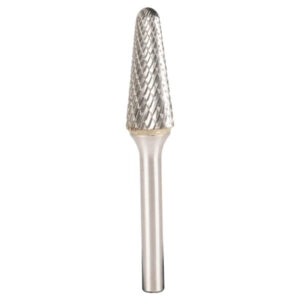
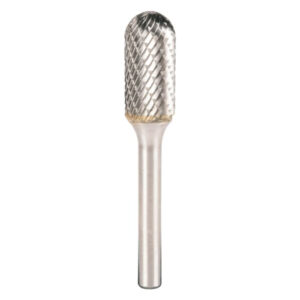
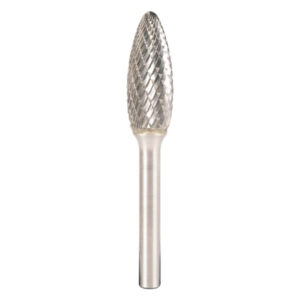
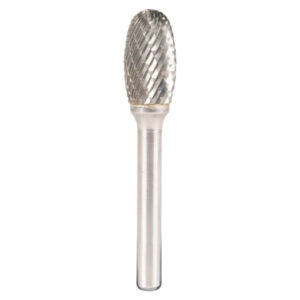
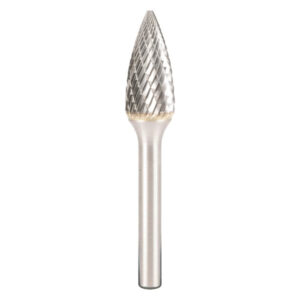
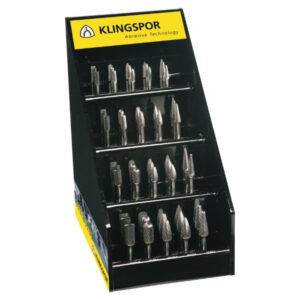
Tungsten Carbide Burrs – Choose the Right Shape for Your Application
Tungsten carbide burrs are rotary cutting tools designed for fast, controlled material removal when used with compatible die grinders and rotary tools. Unlike conventional coated abrasives, carbide burrs cut directly into the workpiece using precision-ground teeth, making them well suited to deburring, shaping, weld dressing, edge preparation and detailed metal removal.
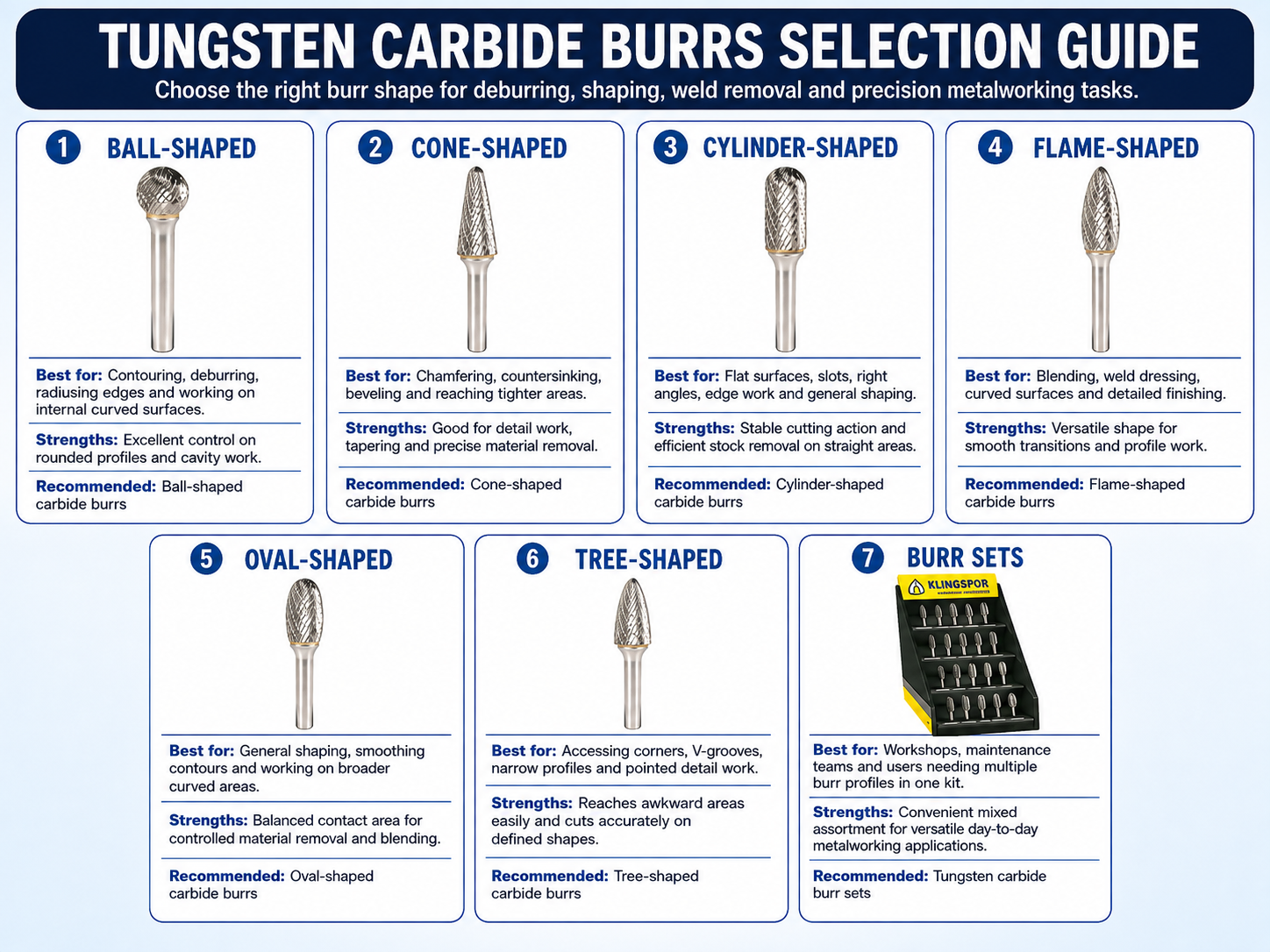
The correct burr shape depends on the geometry of the area being worked. Ball burrs suit rounded profiles and internal curves, cone burrs are ideal for chamfering and countersinking, cylinder burrs provide stable cutting on flat and straight areas, while flame, oval and tree-shaped burrs provide greater access to curves, transitions and difficult profiles.
Looking for other cutting, grinding and deburring products? Explore our related abrasive categories:
Related Cutting & Deburring Categories:
Ball-Shaped Carbide Burrs
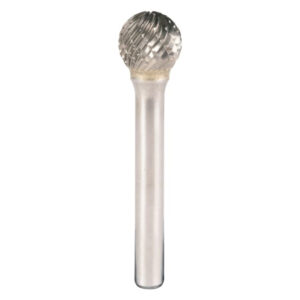
Ball-shaped carbide burrs are designed for contouring, deburring, radiusing edges and working on internal curved surfaces. Their rounded profile gives excellent control when blending curved areas, opening out holes or smoothing concave surfaces.
They are particularly useful where a flat or pointed burr would struggle to maintain smooth contact with the workpiece. The spherical cutting head allows controlled movement in multiple directions, making ball burrs a versatile choice for detailed shaping and cavity work.
- Best for: contouring, deburring, radiusing and internal curves
- Why choose: excellent control on rounded profiles and cavity work
- Typical uses: smoothing internal radii, blending edges and shaping curved features
- Tip: keep the burr moving smoothly to avoid concentrating material removal in one spot
View Ball-Shaped Carbide Burrs →
Cone-Shaped Carbide Burrs
Cone-shaped carbide burrs are ideal for chamfering, countersinking, bevelling and reaching into tapered or restricted areas. Their pointed profile makes it easier to remove material accurately around holes, edges and detailed features.
The taper provides a controlled cutting action that is particularly useful for precision work where you need to gradually increase the contact area as the burr enters the workpiece.
- Best for: chamfering, countersinking, bevelling and detail work
- Why choose: tapered shape gives precise access and controlled material removal
- Typical uses: preparing hole edges, removing burrs and shaping tapered sections
- Tip: use the side of the burr for controlled cutting rather than forcing the very tip into the material
View Cone-Shaped Carbide Burrs →
Cylinder-Shaped Carbide Burrs
Cylinder-shaped carbide burrs are designed for flat surfaces, slots, straight edges and general-purpose material removal. Their straight-sided cutting profile provides stable contact with the workpiece and makes them particularly effective for removing material evenly from larger, flatter areas.
They are a strong choice for general workshop deburring and shaping where controlled stock removal and a consistent cutting action are required.
- Best for: flat surfaces, slots, straight edges and general shaping
- Why choose: stable cutting action and efficient material removal on straight areas
- Typical uses: flattening, edge cleaning, slot work and weld preparation
- Tip: use broad, controlled passes rather than holding the burr stationary against the surface
View Cylinder-Shaped Carbide Burrs →
Flame-Shaped Carbide Burrs
Flame-shaped carbide burrs combine a rounded body with a tapered end, making them highly versatile for blending, weld dressing, curved surfaces and detailed finishing. Their shape allows smooth transitions between different surface angles and good access into tighter areas.
They are especially useful where the workpiece combines curves, edges and profiles and a more versatile burr shape is needed than a simple cylindrical or ball profile.
- Best for: blending, weld dressing, curved surfaces and detailed finishing
- Why choose: versatile profile for smooth transitions and shaped work
- Typical uses: smoothing welds, refining profiles and shaping transitional areas
- Tip: use the wider body for blending and the tapered end for more detailed access
View Flame-Shaped Carbide Burrs →
Oval-Shaped Carbide Burrs
Oval-shaped carbide burrs provide a balanced contact area for controlled shaping and smoothing. Their rounded elliptical profile makes them useful for broader curved surfaces where a ball burr may be too concentrated and a cylindrical burr may not conform closely enough.
They are well suited to general shaping, contouring and blending work, particularly on curved or sculpted components where a smooth cutting action is important.
- Best for: general shaping, smoothing contours and broader curved areas
- Why choose: balanced cutting contact for controlled material removal and blending
- Typical uses: profile refinement, curved surface shaping and smoothing transitions
- Tip: use the full curved face of the burr to maintain an even finish
View Oval-Shaped Carbide Burrs →
Tree-Shaped Carbide Burrs
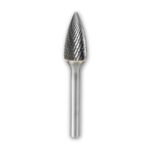
Tree-shaped carbide burrs are designed for accessing corners, V-grooves, narrow profiles and pointed detail work. Their tapered tree-like shape combines useful side-cutting area with a narrow tip, allowing accurate material removal in difficult or defined shapes.
They are particularly valuable where access is limited and a conventional cylinder or ball burr cannot reach the required area effectively.
- Best for: corners, V-grooves, narrow profiles and detailed work
- Why choose: reaches awkward areas while maintaining accurate cutting control
- Typical uses: groove cleaning, weld access, profile work and narrow recesses
- Tip: choose the exact tree profile according to whether you need a rounded or pointed end
View Tree-Shaped Carbide Burrs →
Tungsten Carbide Burr Sets
Tungsten carbide burr sets provide a selection of common burr profiles in one convenient kit. They are ideal for workshops, maintenance departments and users who regularly encounter different deburring, shaping and metalworking tasks.
A mixed burr set gives access to multiple shapes without purchasing each profile separately, making it easier to switch between flat surfaces, curves, edges, holes, grooves and detailed finishing work as required.
- Best for: workshops, maintenance teams and varied day-to-day metalworking
- Why choose: convenient assortment of different burr profiles in one set
- Typical uses: general deburring, weld removal, shaping and repair work
- Tip: a mixed set is a good starting point if you regularly work on different component shapes
View Tungsten Carbide Burr Sets →
Tungsten Carbide Burrs Quick Selection Guide
| Burr Shape | Best For | Typical Uses |
|---|---|---|
| Ball-Shaped | Contours & internal curves | Radiusing, cavity work, curved surfaces and deburring |
| Cone-Shaped | Chamfering & detail work | Countersinking, bevelling and tapered areas |
| Cylinder-Shaped | Flat & straight surfaces | Slots, edges, flattening and general material removal |
| Flame-Shaped | Blending & transitions | Weld dressing, curved surfaces and profile finishing |
| Oval-Shaped | General shaping & smoothing | Broad curves, contours and controlled blending |
| Tree-Shaped | Awkward & narrow areas | Corners, grooves, narrow profiles and detailed shaping |
| Burr Sets | Versatile workshop use | Multiple deburring, shaping and maintenance applications |
Frequently Asked Questions
What are tungsten carbide burrs used for?
Tungsten carbide burrs are used for deburring, shaping, weld removal, edge preparation and precision material removal. They are commonly used with die grinders and rotary tools for working on metal and other compatible materials.
Which carbide burr shape should I use?
Choose the shape according to the area being worked. Ball burrs are best for curves and cavities, cone burrs for chamfering and countersinking, cylinder burrs for flat surfaces, flame burrs for blending, oval burrs for broad contours and tree burrs for narrow or awkward profiles.
What is the difference between a carbide burr and a grinding point?
A carbide burr removes material using precision-cut teeth machined into the carbide head. A mounted grinding point removes material using bonded abrasive grain. Carbide burrs are generally chosen where fast, accurate cutting and long tool life are required.
Can tungsten carbide burrs remove welds?
Yes. Carbide burrs are widely used for weld dressing and controlled weld removal. Cylinder, flame and tree-shaped burrs can be particularly useful depending on the shape and accessibility of the weld.
Can carbide burrs be used on stainless steel?
Suitable tungsten carbide burrs can be used on stainless steel and other metals, provided the correct cut type, operating speed and technique are used. Always check the individual burr specification before use.
What is the best carbide burr for deburring holes?
Ball and cone-shaped burrs are commonly used for deburring holes. Ball burrs work well around curved internal edges, while cone burrs are useful where a chamfered or countersunk edge is required.
Should I use a carbide burr set or individual burrs?
Choose individual burrs if you repeatedly perform the same operation and already know the profile you require. A burr set is more practical for workshops and maintenance teams that regularly work on different shapes and applications.
What tool should I use with tungsten carbide burrs?
Carbide burrs are commonly used with compatible air or electric die grinders and rotary tools. The burr shank size and recommended operating speed must match the tool being used.
