










Blog
Why Is My Sanding Belt Burning the Material? Causes & Fixes
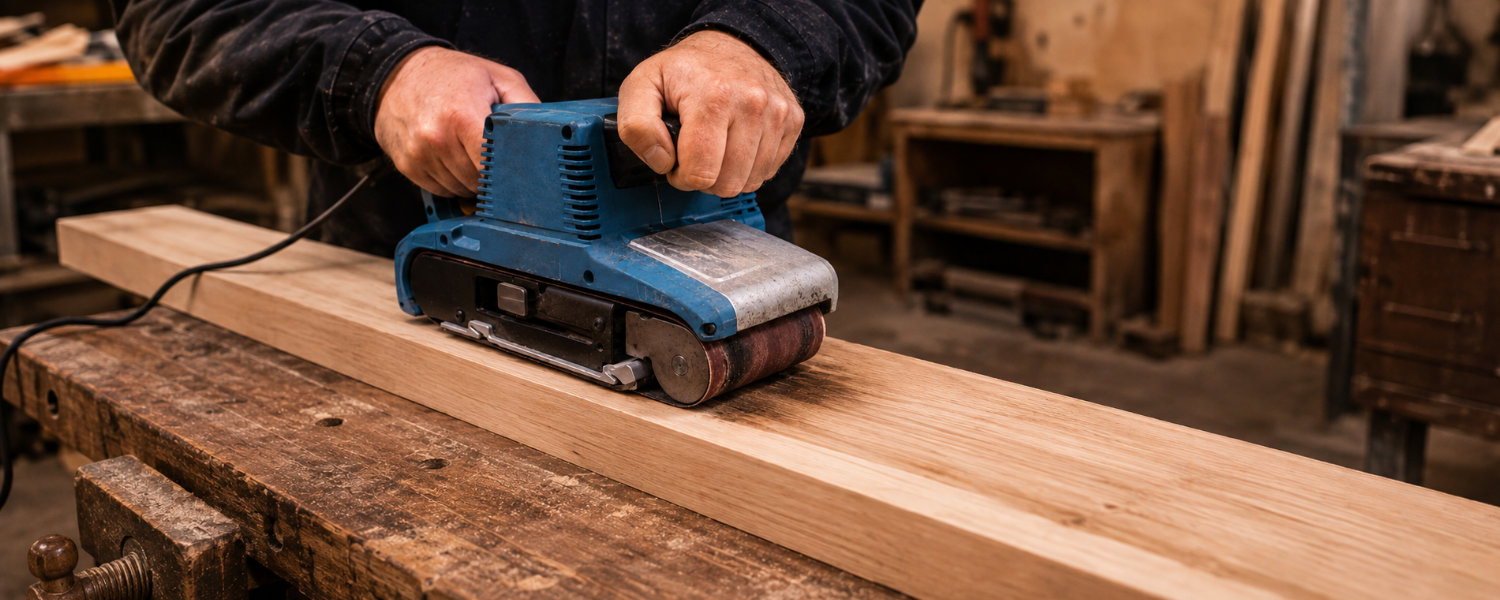
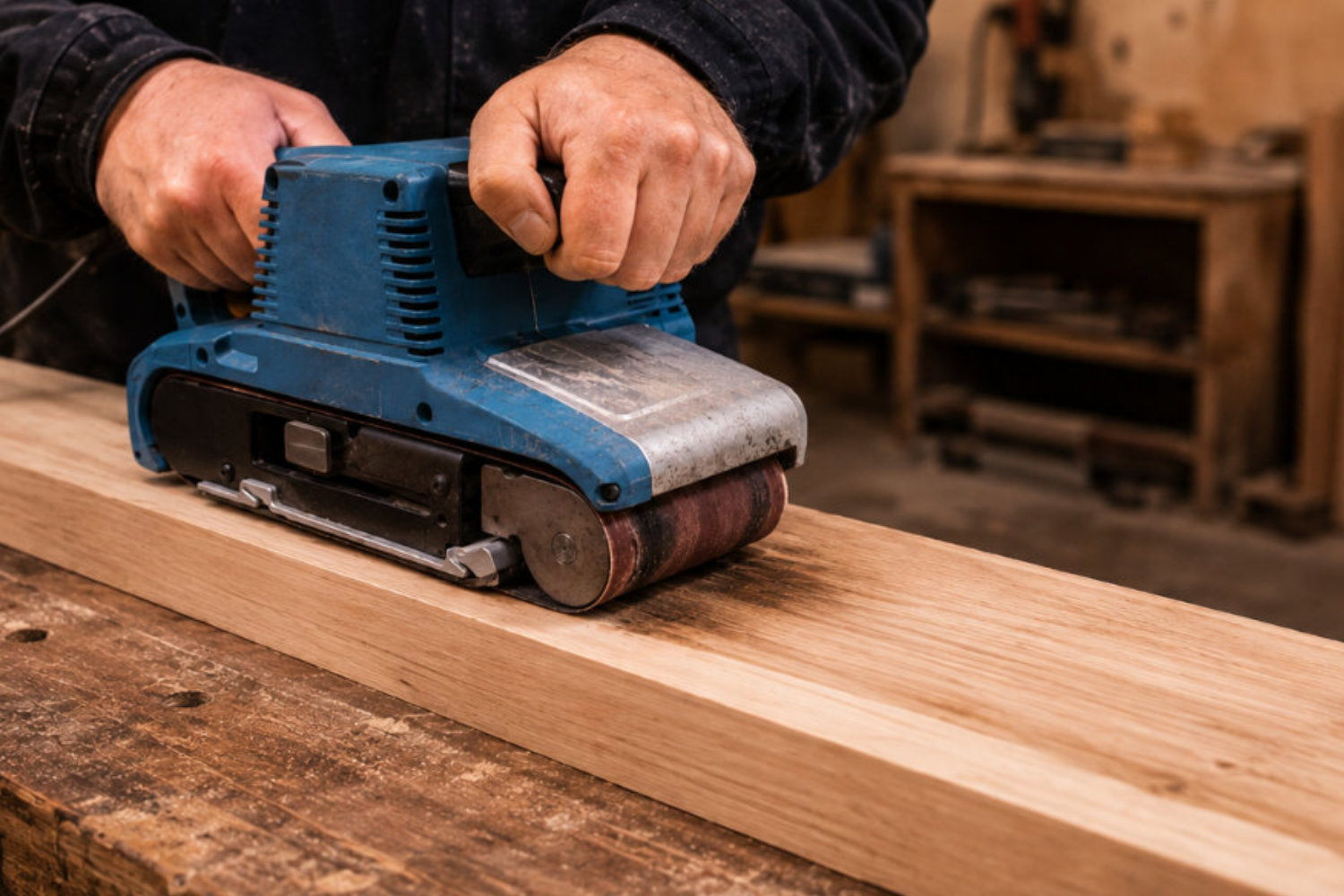
If your sanding belt is burning the material, leaving dark marks or creating excessive heat,
it usually means the abrasive is generating too much friction and is no longer cutting efficiently.
This can be caused by excessive pressure, a worn or clogged belt, the wrong grit, unsuitable abrasive material
or incorrect machine settings. Most sanding heat problems can be diagnosed fairly quickly once you know what to look for.
Reduce the sanding pressure first. If the burning improves, excessive pressure was likely contributing.
If it does not, inspect the belt for clogging, glazing or worn abrasive grain.
At-a-Glance: Why Is My Sanding Belt Burning?
| Problem | Likely Cause | What to Try |
|---|---|---|
| Dark burn marks | Too much pressure or dwell time | Reduce pressure and keep the work moving |
| Belt looks shiny | Belt is glazed or worn | Replace the belt |
| Belt covered in dust or material | Clogging / loading | Improve extraction or use a more suitable abrasive |
| Burning during heavy stock removal | Grit is too fine | Start with a coarser grit |
| New belts also run hot | Wrong specification or machine setup | Check grain, speed, pressure and contact conditions |
Common Causes of Sanding Belt Burning
- Too much pressure — extra pressure creates more friction and heat.
- A worn or glazed belt — blunt abrasive grains rub instead of cutting.
- Belt clogging — resin, paint, aluminium and dust can block the abrasive surface.
- Incorrect grit — a fine grit used for heavy removal can create excessive heat.
- Wrong abrasive grain — the belt material may not suit the workpiece or pressure.
- Machine setup — speed, tracking, contact wheel or platen condition can affect heat.
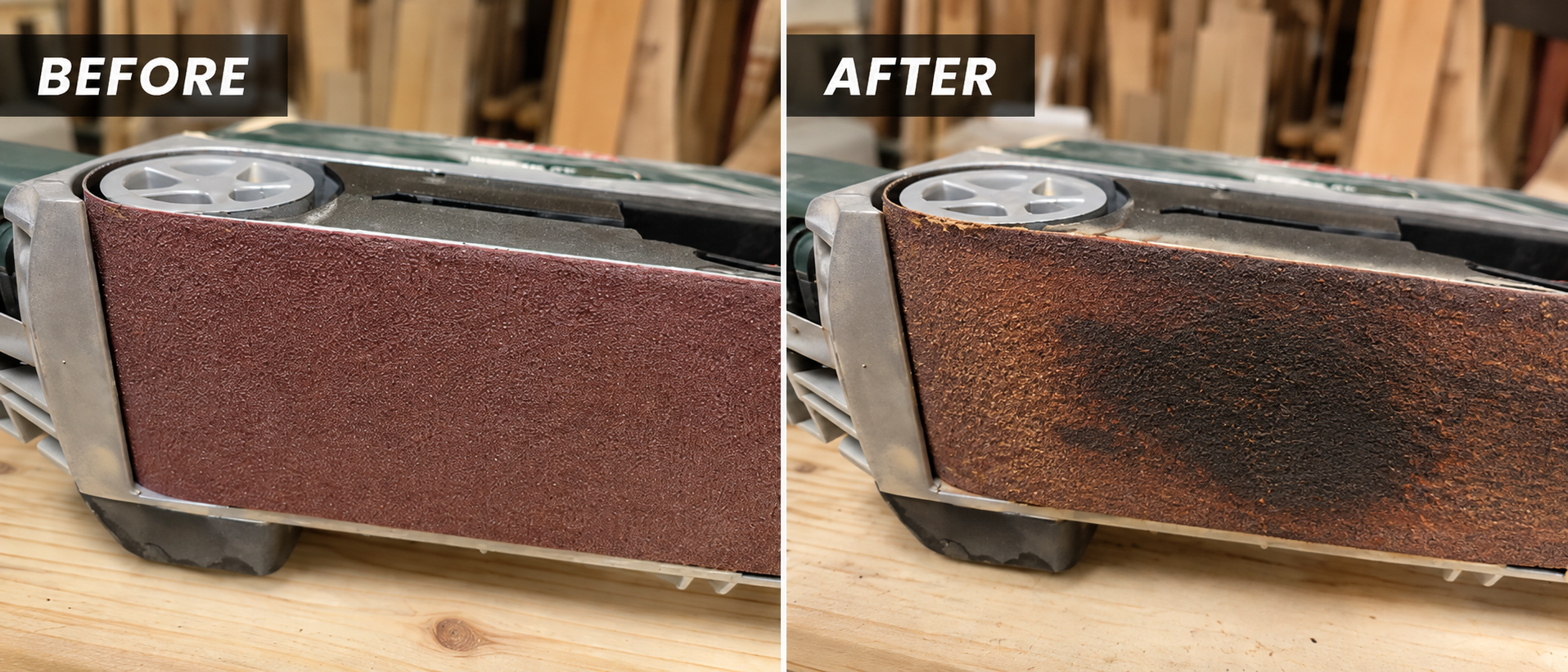
What Is a Glazed Sanding Belt?
A belt can still look usable while no longer cutting properly. If the abrasive surface looks smooth, polished or shiny, the grain may have become glazed.
Once this happens, the operator often applies more pressure to compensate, which increases friction and heat even further.
If a sanding belt suddenly stops cutting effectively, do not automatically push harder.
Stop and inspect the abrasive first.
How to Stop a Sanding Belt Burning
- Reduce sanding pressure.
- Inspect the belt for clogging, glazing or worn grain.
- Check the grit. Use a coarser abrasive if significant stock needs removing.
- Check the abrasive material is suitable for the workpiece.
- Improve extraction if dust or removed material is building up.
- Check machine settings, tracking, contact wheel and platen condition.
- Test a fresh belt once the process has been checked.
Choosing the Right Abrasive Grain
| Abrasive | Typical Characteristics | Common Applications |
|---|---|---|
| Aluminium Oxide | Versatile and controlled | Wood and general sanding |
| Zirconia | Tough and self-sharpening | Metal stock removal |
| Ceramic | High-performance cutting | Hard metals and demanding applications |
| Silicon Carbide | Sharp cutting grain | Glass, composites and fine finishing |

Looking for more sanding belt help? Explore these guides:
Related Sanding Belt Guides:
→ How to Choose the Right Sanding Belt
→ Why Do Sanding Belts Break?
→ Browse Sanding Belts
Frequently Asked Questions
Why does my belt sander burn wood?
Usually because of excessive pressure, a worn or clogged belt, too much dwell time or an unsuitable grit.
Can a clogged sanding belt cause burn marks?
Yes. Once material blocks the abrasive grain, the belt cuts less effectively and creates more friction.
Should I press harder when a sanding belt stops cutting?
No. Inspect the belt first. Extra pressure on a glazed or clogged abrasive will normally increase heat.
Why does a brand-new belt still burn the material?
Check the grit, abrasive grain, machine speed and operating pressure. The belt specification may not suit the application.
Tell us your material, machine, belt size, current grit and the problem you’re experiencing and our team can help recommend a suitable abrasive.