









Blog
Why Do Sanding Belts Clog? Causes & Solutions
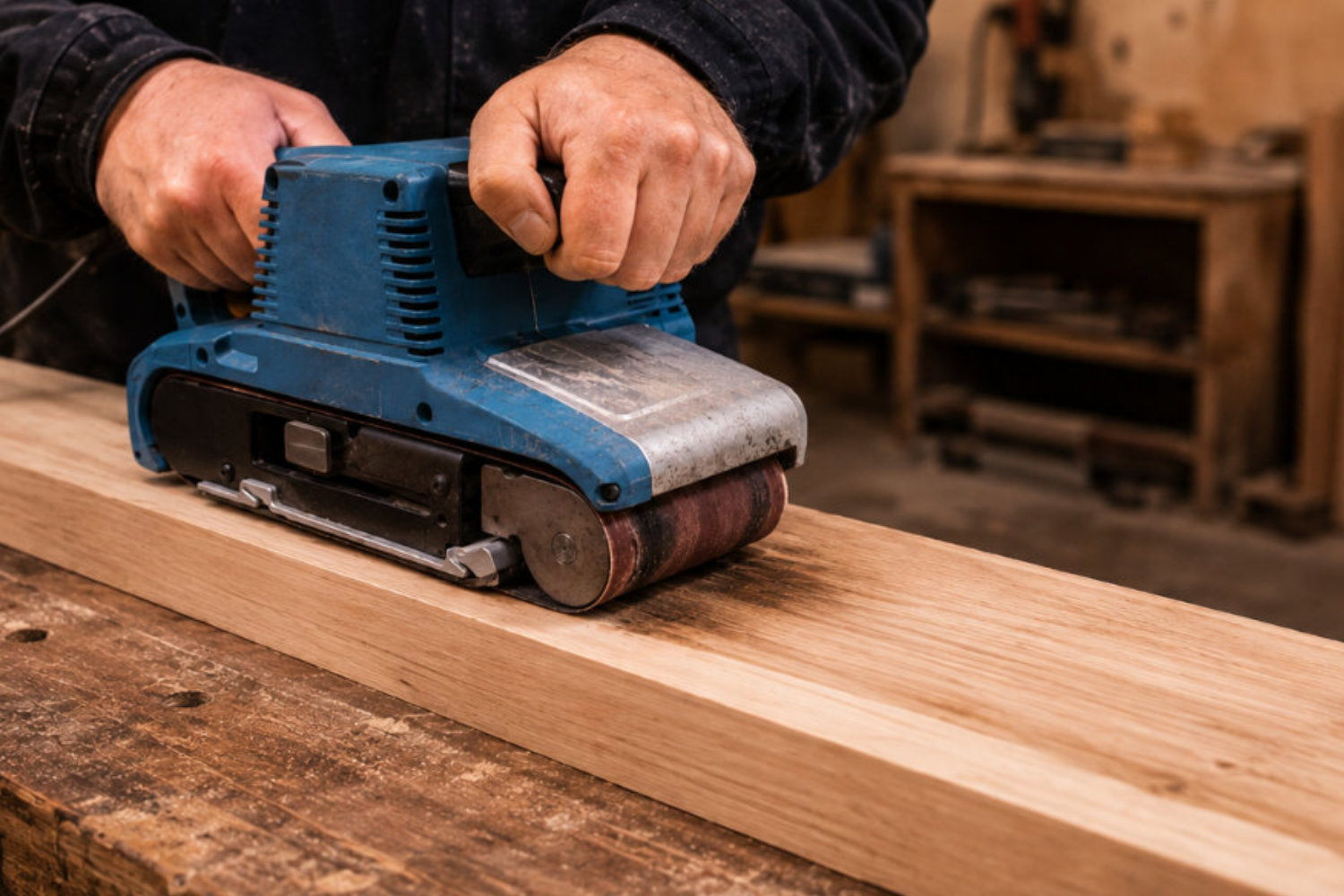
If your sanding belt keeps clogging, loses its cutting performance quickly or becomes covered
in dust and removed material, the abrasive is experiencing what is commonly known as loading.
Loading happens when sanding debris becomes trapped around the abrasive grain instead of being removed from
the belt. This reduces cutting efficiency, shortens useful belt life and can also increase friction and heat.
Quick Check:
Look closely at the abrasive surface. If the spaces between the abrasive grains are filled with wood dust,
resin, paint, aluminium or other removed material, the belt is likely loaded rather than simply worn out.
At-a-Glance: Why Is My Sanding Belt Clogging?
“`
| Problem | Likely Cause | What to Try |
|---|---|---|
| Wood dust packed into belt | Poor extraction or unsuitable belt coating | Improve extraction and consider an open-coat abrasive |
| Sticky resin build-up | Resinous or soft timber | Use a loading-resistant belt designed for wood |
| Paint filling abrasive surface | Soft coating loading the grain | Use an open-coat or anti-loading abrasive |
| Aluminium smearing onto belt | Soft metal loading | Review abrasive type and operating pressure |
| New belts clog very quickly | Wrong abrasive specification or poor dust removal | Check belt coating, grit and extraction |
Common Causes of Sanding Belt Clogging
- Poor dust extraction — removed material remains around the abrasive instead of being cleared away.
- Resinous timber — pine and other resinous woods can leave sticky deposits on the belt.
- Paint and coatings — softer coatings can quickly fill the spaces between abrasive grains.
- Sanding aluminium or soft metals — removed metal can smear and build up on the abrasive surface.
- Using the wrong belt coating — a dense, closed-coat abrasive may load faster on some materials.
- Excessive pressure or heat — additional heat can make some removed materials more likely to stick to the belt.
What Is Sanding Belt Loading?
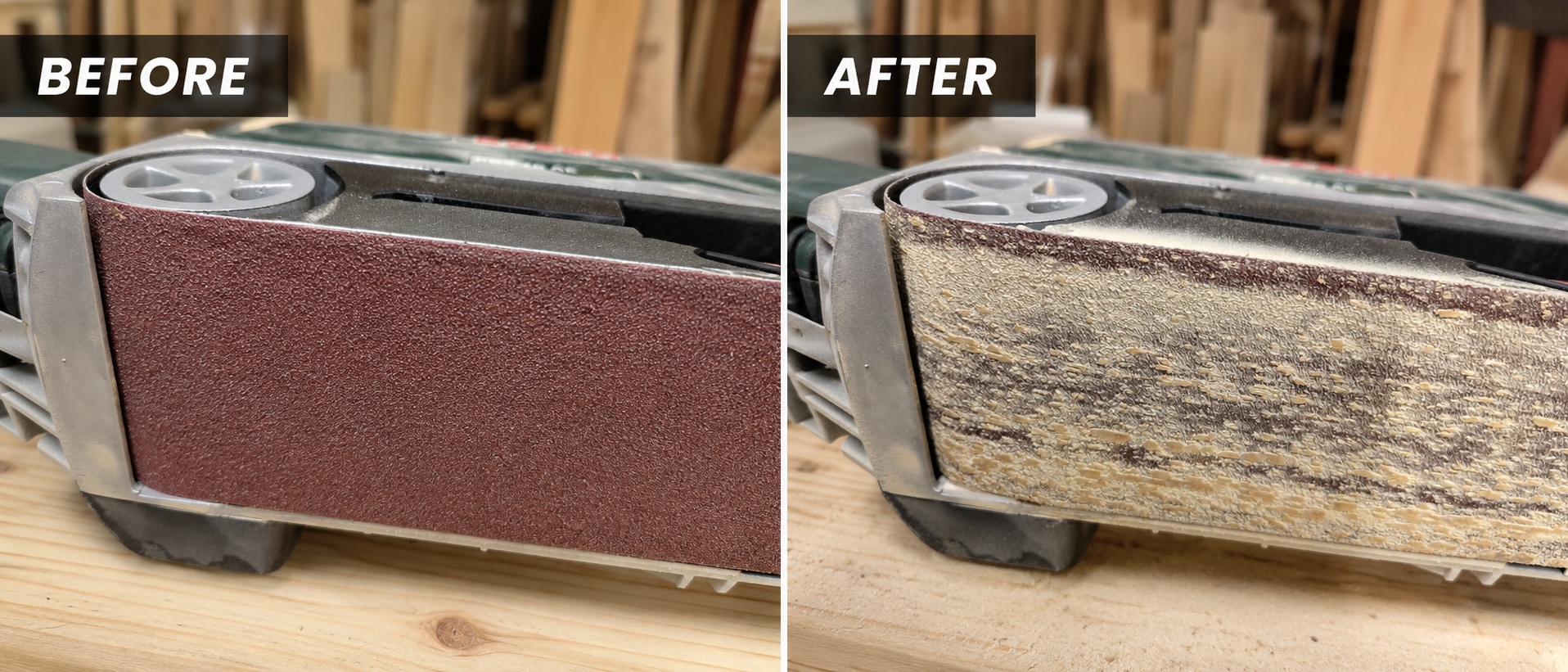
Sanding belt loading occurs when removed material fills the spaces around the abrasive grains.
Instead of the grain making clean contact with the workpiece, the belt begins running across a layer
of trapped dust, resin, coating or metal.
The belt may still have plenty of abrasive grain remaining, but its cutting performance can fall dramatically
because that grain can no longer reach the surface properly.
Important:
A clogged sanding belt is not necessarily a worn-out sanding belt. If belts are repeatedly loading long before
the abrasive grain is exhausted, review the material, dust extraction and belt specification.
How to Stop Sanding Belts Clogging
- Improve dust extraction. Remove sanding debris as efficiently as possible.
- Use an open-coat abrasive where loading is a problem.
- Choose an anti-loading coating for materials such as paint, timber and other clog-prone surfaces where suitable.
- Use the correct grit. Avoid forcing an unsuitable fine grit to perform heavy removal.
- Reduce excessive pressure and avoid unnecessary heat build-up.
- Match the abrasive to the material, especially when working with resinous woods or soft metals.
- Check the belt regularly so loading is identified before cutting performance falls significantly.
Open Coat vs Closed Coat Abrasives
“`
| Coating Type | How It Works | Typical Consideration |
|---|---|---|
| Open Coat | More space between abrasive grains | Helps sanding debris escape and reduces loading |
| Semi-Open Coat | Balance between grain coverage and debris clearance | Useful where both cutting performance and loading resistance are required |
| Closed Coat | Higher abrasive grain coverage | Suitable for many applications but may load faster on clog-prone materials |
| Anti-Loading / Stearated | Additional coating helps reduce material sticking to the abrasive | Often useful when sanding wood, paint, coatings and other loading-prone materials |
Which Materials Commonly Cause Belt Loading?
- Soft and resinous woods such as pine
- MDF and other wood-based panels producing high volumes of fine dust
- Paint, lacquer and coatings
- Aluminium and other softer metals
- Plastics and some composite materials
“`
“`
Looking for more sanding belt help? Explore these guides:
Related Sanding Belt Guides:→ How to Choose the Right Sanding Belt
Frequently Asked Questions
Why does my sanding belt keep clogging with wood?
Wood dust and resin can collect around the abrasive grain, particularly when sanding resinous timber or when dust extraction is poor. An open-coat or loading-resistant abrasive may help.
Why does aluminium clog sanding belts?
Aluminium is relatively soft and removed material can build up or smear across the abrasive surface. Using an abrasive suited to aluminium and the correct operating conditions can reduce loading.
What is an open-coat sanding belt?
An open-coat abrasive has more space between the abrasive grains, giving sanding dust and debris more room to escape instead of becoming trapped on the belt.
Does a clogged belt need replacing?
Not always because the abrasive grain itself may still be usable. However, the cause of repeated loading should be identified before continuing with the same belt specification.
Tell us your material, machine, belt size, grit and current abrasive specification
and our team can help identify a more suitable sanding belt.