











Blog
Glass Bead Shot-Blasting Grit
Glass bead blasting is a surface preparation technique that uses tiny glass beads to remove surface contaminants and provide a clean, smooth surface finish. It is commonly used in industries such as automotive, aerospace, and marine for the cleaning and finishing of metal, plastic, and composite surfaces.
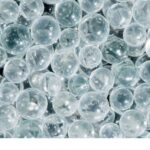
Glass bead blasting is a non-abrasive process that is gentle enough to be used on delicate materials such as aluminum, but it is also effective on tough surfaces such as steel. The glass beads are made of soda-lime glass, which is then crushed, sorted, and screened to create uniformly sized beads that are used for blasting.
One of the main benefits of using glass bead blasting is that it can provide a very precise finish. The size of the beads can be varied to achieve different surface finishes, from a fine, satin-like finish to a more textured surface. Glass beads are also relatively low cost compared to other blasting media, making them an economical option for many applications.
When using glass bead blasting, it is important to use the right size of beads for the specific application. Beads that are too large can damage the surface being blasted, while beads that are too small may not effectively remove the contaminants. The pressure and duration of the blasting process should also be carefully controlled to avoid damage to the surface being treated.
Glass bead blasting is often used for the removal of paint, rust, and other surface contaminants, as well as for polishing and surface preparation. It is a popular technique for preparing surfaces prior to painting or coating, as it provides a clean, uniform surface that allows for better adhesion of the coating.
